
Reiki Training
Authentic Usui Reiki Training in South Africa
Deciding to learn Reiki is an exciting step, whether you are drawn to self-healing or looking toward a future professional practice. But with so many Reiki courses and training providers across South Africa, it can be hard to know where to begin.
Here are the essential factors to consider when choosing the right Reiki Master and course for your journey:
1. Clarify Your Intent: Personal Healing vs. Professional Practice
Consider why you want to learn Reiki.
- Level 1 (Shoden): Level I courses are focused on self-care, personal healing, and sharing Reiki with friends, family and pets. It lays the groundwork for your personal growth through energy healings.
- Level 2 (Okuden): The foundational qualification required for professional client practice, introducing sacred symbols, distance healing, and deeper practitioner techniques. Read more about the differences between Level 1 and Level 2.
An important note: A reputable school will encourage space between levels rather than rushing you through both levels in a single weekend. Allowing time for your energy body to integrate after Level 1 ensures you step into professional training grounded and confident.
2. An Unbroken Lineage Back to Mikao Usui
There are various styles of Reiki you could choose from, however the most important factor when choosing is whether the Reiki Master has a lineage that can be traced back to Mikao Usui, the founder of the system of Usui Reiki. A lineage is similar to a family tree, documenting the links in the energetic chain from teacher to student.
- View our Usui Reiki lineage. We were trained by Torsten A. Lange (founder and director of The Reiki Academy London and author)
- Our lineage also includes the teachings of Penelope Quest (prolific Reiki author and advisor to the NHS and Open University); William Lee Rand (founder of The International Center for Reiki Training (ICRT) and author; and Frans Steine (co-founder of the International House of Reiki and author).
- Because our teachers studied both the traditional Japanes techniques and Western approaches, our students receive balanced, comprehensive training in both styles.
3. In-person versus Online
Attunements (spiritual blessings or Reiju) are the heart of the Usui Reiki system. While online classes are great for theoretical background, we believe that Reiki attunements for foundational levels (Level 1 and Level 2) should always be received in person.
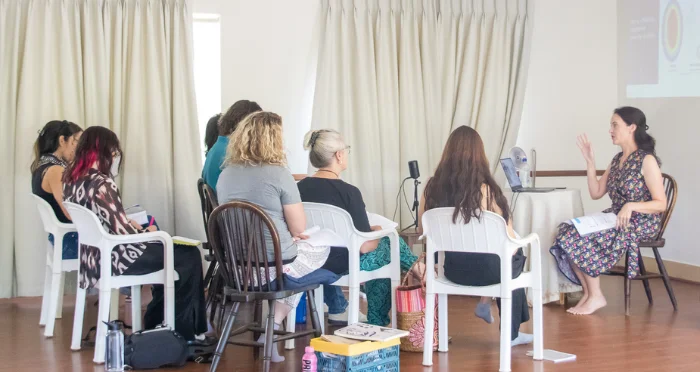
Direct, in-person training ensures your teacher can guide your hand placements and answer immediate questions about physical sensations. Meeting and being part of a group of students is also important to create an impactful and memorable learning experience.
4. Professional Affiliations, Ethical Standards and Real-World Experience
Check whether your prospective teacher is registered with an established governing body and actively practising Reiki. A great teacher doesn’t just pass along “book knowledge”. They bring real-world, clinical client experience into the classroom.
- Look for a teacher who regularly treats clients, not just teaches courses. Natasja actively treats clients in person in George and provides distance Reiki to clients worldwide. This active practice means your learning is enriched with practical, modern case experience, energetic discernment, and grounded client scenarios.
- Natasja and John are both registered Master Teacher members of the Reiki Guild South Africa. Natasja also serves as an active Reiki Mentor and has presented webinars for Guild members.
- All students and graduates are taught, and expected to abide by a clear Code of Conduct and Ethics.
5. Ongoing Support and Mentorship
A weekend workshop should be the start of your relationship with your teacher, not the end. Meaningful integration of the Reiki way of life happens after the course, especially during the initial 21-day clearing cycle.
- When you train with us you become part of a community of students. We regularly share additional guidance and information through our blog and students become lifelong friends with their class mates. We take the role as a Reiki Master very seriously and are always available to students for any help and guidance.
- For Level 2 and Master graduates, our Practitioner Membership Programme provides practical guidance on marketing, client intake, ethics, and setting up a professional practice or teaching career
Thank you for facilitating and guiding me through this amazing healing journey. The tools you have given and taught me have helped me look within and do the inner work to help me live in my highest potential and for this I am forever grateful. I have found so much healing in Reiki. I couldn’t ask for a better teacher to guide me on this magical journey. Thank you so super much!!
Reiki Level 2 student – Pretoria
Do I need special gifts or psychic ability to learn Reiki?
No, not all. Reiki is not reserved for a select few; it is a natural, universal human capability. Anyone with an open mind and a willingness to learn can practice Reiki effectively once guided through proper instruction and attunement.
How long should I wait between Reiki Level 1 and Level 2?
We recommend at least 2 to 3 months between Level 1 and Level 2. This window allows your system to complete its natural 21-day clearing period, gives you time to build a consistent daily self-treatment habit, and lets you practice comfortably on friends and family before learning practitioner techniques.
Where do you hold in person Reiki courses in South Africa?
We host regular in-person Level 1 courses over a weekend in Pretoria (Gauteng) and along the Garden Route (Plettenberg Bay). Practitioner and Master modules have part or fully online components.
Usui Reiki Training Levels

Level 1
The Reiki journey of self-healing starts here.

Level 2
Reiki Practitioner training goes deeper and allows you to charge a fee for giving Reiki treatments.

Level 3
At Reiki Master level you come to understand that Reiki is so much more than you could have imagined.